
Laboratory of Architectural Archaeology
The full name of the research unit is the "Laboratory of Architectural Archaeology and Interdisciplinary Study of Architectural Monuments." It was established at the Institute of Archaeology of the Russian Academy of Sciences in 2021 to conduct research under the grant "Pre-Mongolian Paintings of Novgorod: Archaeological Context and Natural Science Research (Frescoes of St. George's Cathedral of the Yuryev Monastery from Excavations in 2013–2020)."
The overall scientific problem underlying the project is aimed at a comprehensive interdisciplinary study of the St. George's Cathedral of the Yuryev Monastery in Veliky Novgorod—an outstanding monument of ancient Russian culture and a UNESCO World Heritage Site. The central objects of study will be the cathedral's frescoes, exceptional in their artistic quality and technique, dating from the first third of the 12th century. The material culture of the princely monastery, which includes architecture, monumental easel paintings (icons), manuscripts, building materials, funerary structures, and a complex of archaeological finds, will be studied for the first time. The proposed project will define methods and techniques for studying the relationship between the material component, detailed using precise scientific methods, and the high quality of the artistic ensemble of St. George's Cathedral in the Yuryev Monastery.
The primary goal of the planned scientific research is a comprehensive study of the murals of St. George's Cathedral in the Yuryev Monastery in Novgorod, conducted using a wide range of analogies. The study aims to obtain a comprehensive fund of natural-scientific data on the composition of the plaster and the pigments used in the paintings. Furthermore, this study aims to place these data, obtained using natural-scientific methods, within the context of history, art history, architecture, and the history of material culture. The historical and archaeological context within which the murals are proposed to be studied will be provided by anthropological, archaeological, and architectural fieldwork. Interaction with these disciplines is one of the most important goals of the research. The authors see the publication and rapid introduction of the frescoes into scholarly circulation as the most important goal of their study.
The overall scientific problem underlying the project is aimed at a comprehensive interdisciplinary study of the St. George's Cathedral of the Yuryev Monastery in Veliky Novgorod—an outstanding monument of ancient Russian culture and a UNESCO World Heritage Site. The central objects of study will be the cathedral's frescoes, exceptional in their artistic quality and technique, dating from the first third of the 12th century. The material culture of the princely monastery, which includes architecture, monumental easel paintings (icons), manuscripts, building materials, funerary structures, and a complex of archaeological finds, will be studied for the first time. The proposed project will define methods and techniques for studying the relationship between the material component, detailed using precise scientific methods, and the high quality of the artistic ensemble of St. George's Cathedral in the Yuryev Monastery.
The primary goal of the planned scientific research is a comprehensive study of the murals of St. George's Cathedral in the Yuryev Monastery in Novgorod, conducted using a wide range of analogies. The study aims to obtain a comprehensive fund of natural-scientific data on the composition of the plaster and the pigments used in the paintings. Furthermore, this study aims to place these data, obtained using natural-scientific methods, within the context of history, art history, architecture, and the history of material culture. The historical and archaeological context within which the murals are proposed to be studied will be provided by anthropological, archaeological, and architectural fieldwork. Interaction with these disciplines is one of the most important goals of the research. The authors see the publication and rapid introduction of the frescoes into scholarly circulation as the most important goal of their study.
Employees
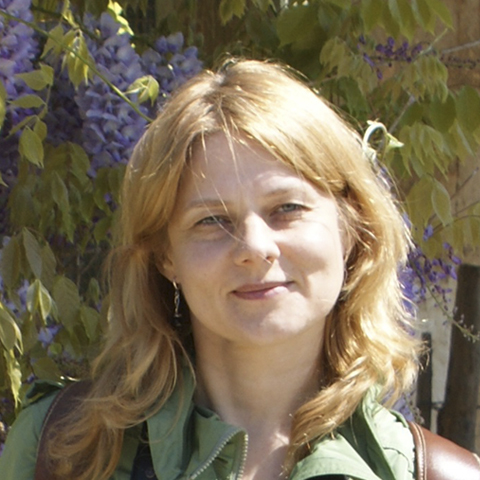
Vdovichenko Marina Viktorovna
Deputy Director of the Institute of Archaeology Russian Academy of Sciences, PhD in Art History

Zubavichus Evgeniy Yanovich
Laboratory assistant at the Laboratory of Architectural Archaeology and Interdisciplinary Research of Architectural Sites
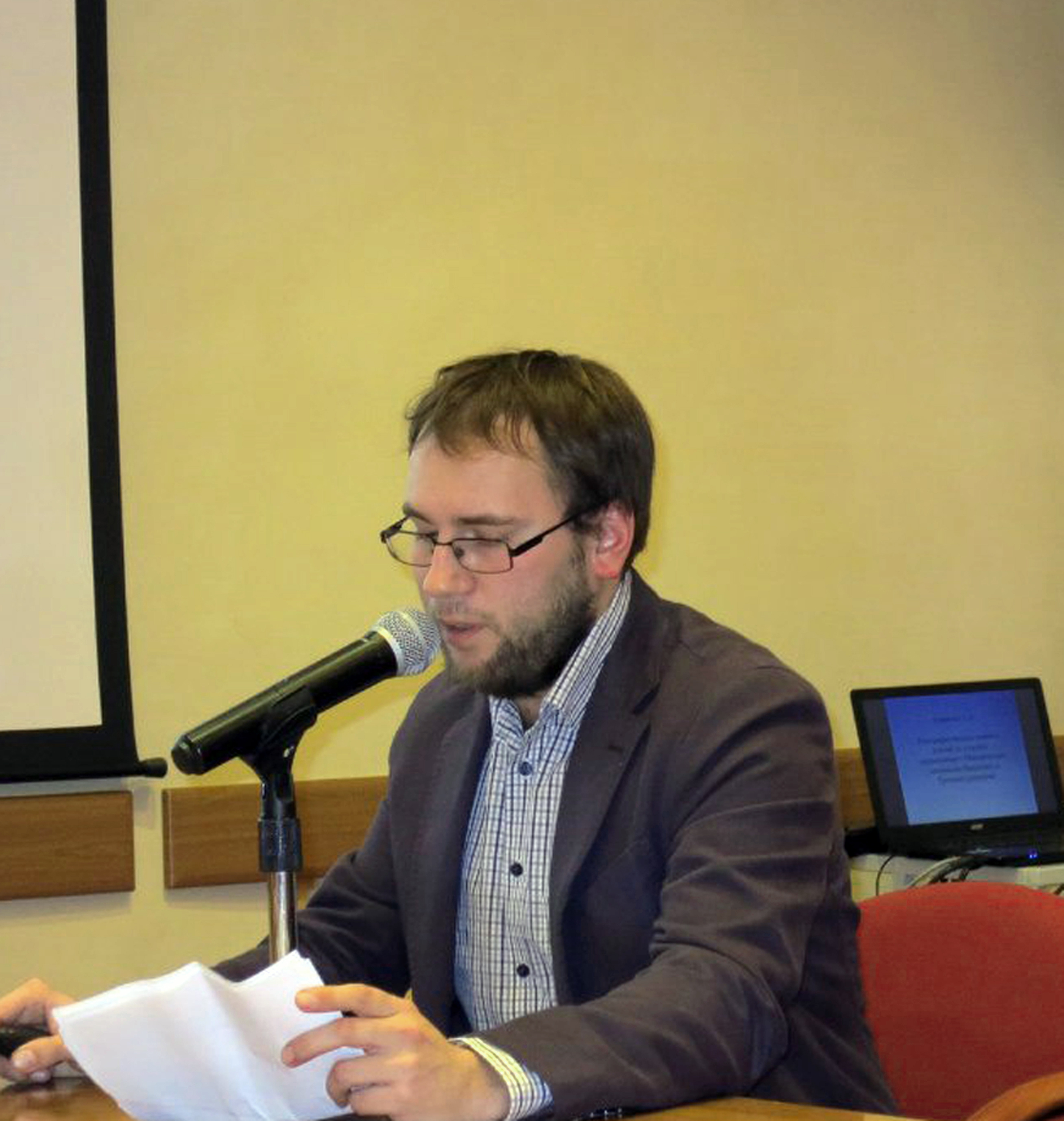
Kudryavtsev Andrey Alekseevich
Research Fellow at the Laboratory for architectural archaeology and interdisciplinary studies of monuments of architecture, PhD in History

Prorokova Evgeniya Nikolaevna
Junior Research Fellow at the Laboratory for architectural archaeology and interdisciplinary studies of monuments of architecture
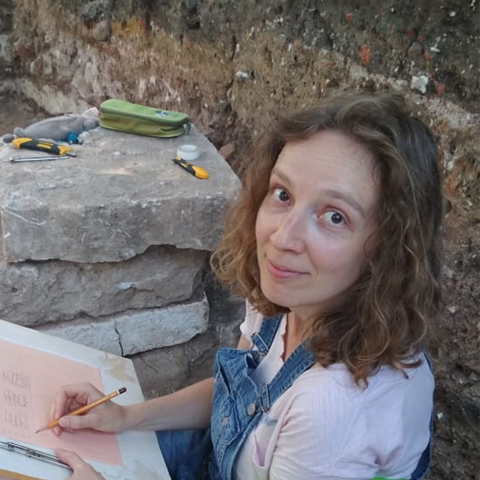
Fomicheva Yulia Sergeevna
Junior Research Fellow at the Laboratory for architectural archaeology and interdisciplinary studies of monuments of architecture

Yanovskaya Yekaterina Gennadyevna
Assistant of Architectural Archaeology and Interdisciplinary Research of Architectural Sites